Licensed from the start.
Work with artists and labels on catalogue permissions and bespoke artist models. One model, built around one artist’s sound, with their approval.
 PORTOTry the prototype
 Streaming + music generation
Licensed originals. Personal variations.
More income to fund the next original.
Explore the interactive listening prototype.
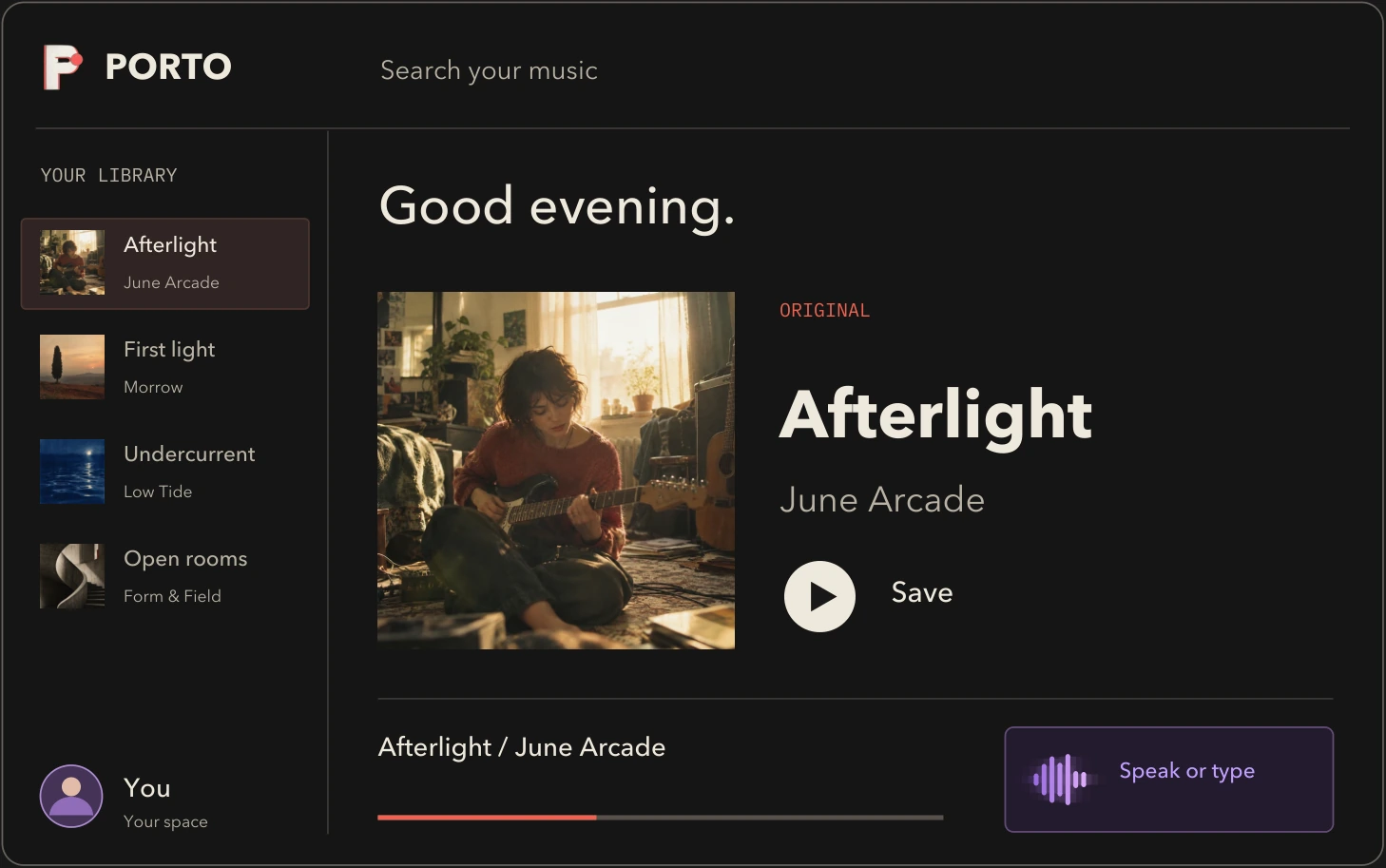
“Play June Arcade’s Afterlight.”
Speak or type01 / Made for listening
Familiar streaming. Personalised by you.
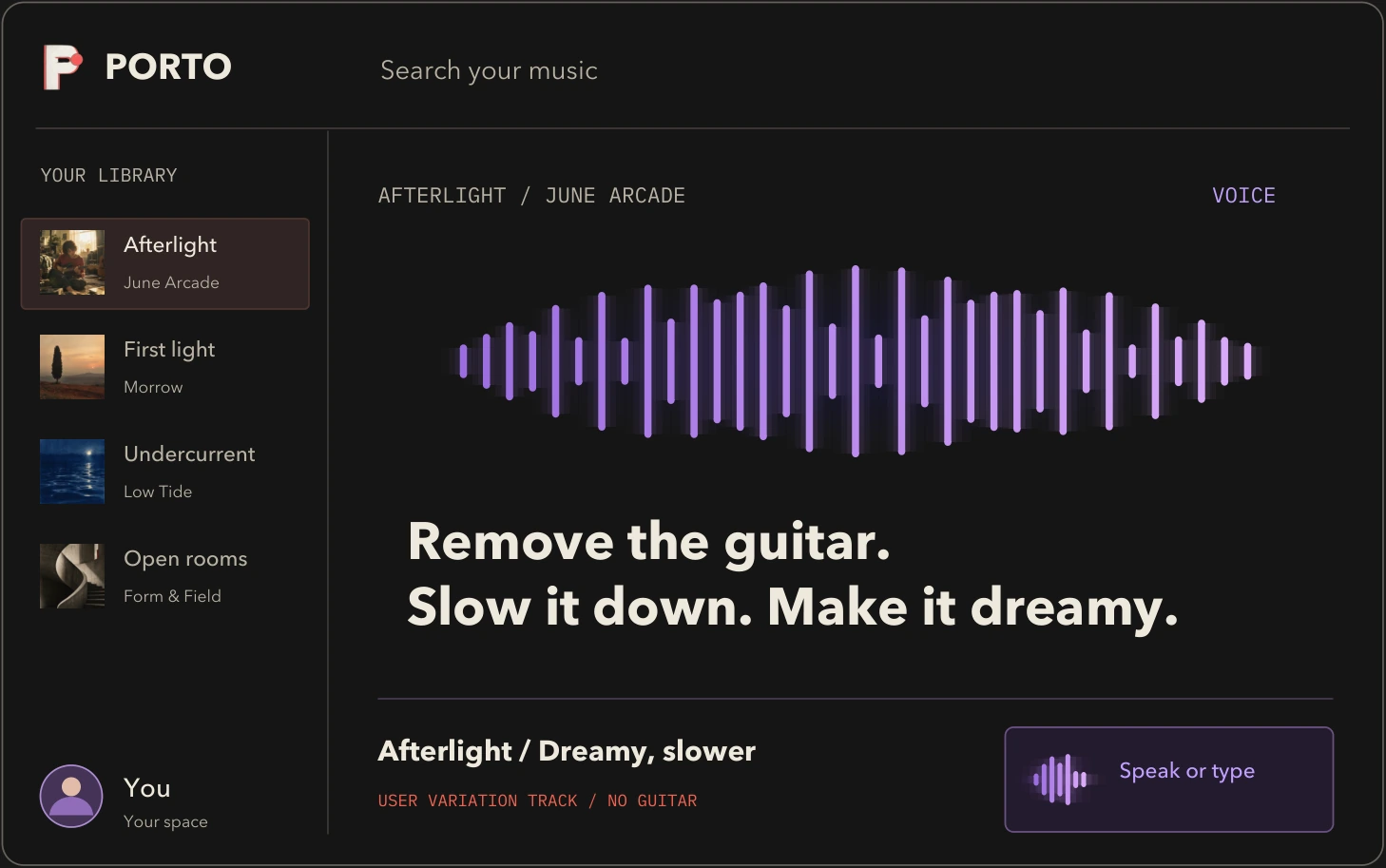
Ask with your voice or type a request. Porto’s product direction is to turn licensed originals into personal User Variation Tracks, within the permissions set by the artist and rights holders.
“Remove the guitar.
Slow it down.
Make it dreamy.”
A concept request. Full generation capabilities are in development.
Find your version. Follow the people who made it. Share a new way to hear a song, with every variation connected to its original artist.
More ways to listen.
More ways for a single track
to generate royalties.
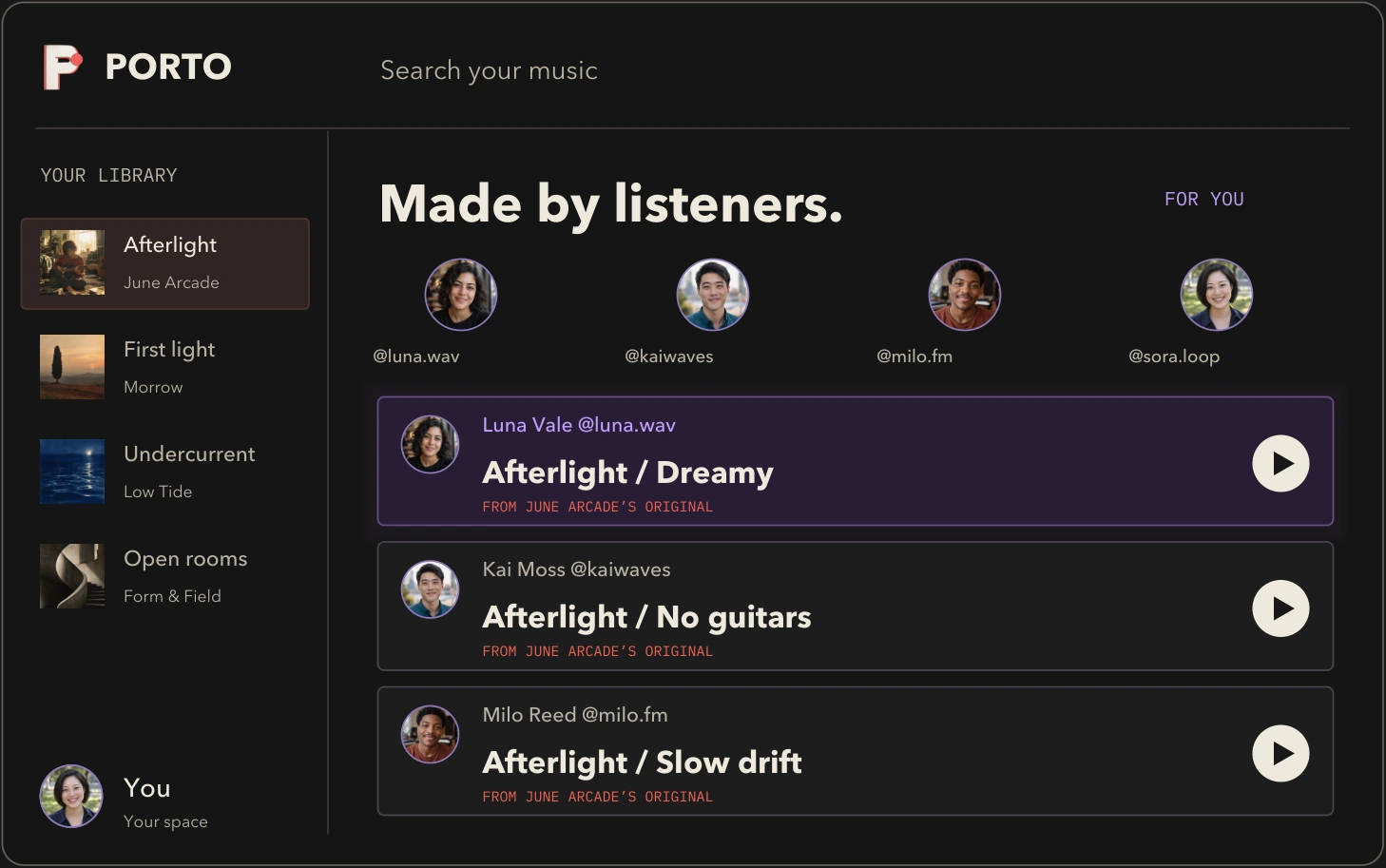
Product concept screens feature fictional artists and creators. The interactive prototype demonstrates listening, voice/text requests and variations; it does not provide production model generation, licensed catalogue access or live payments.
02 / To benefit the artist
The original stays at the centre. Every new way to listen should create another way to support the artist behind it.
Work with artists and labels on catalogue permissions and bespoke artist models. One model, built around one artist’s sound, with their approval.
Artists and rights holders set the creative permissions. Approved variations keep their source connection, with control over rights and release decisions.
Paid listening to originals and permitted variations funds the source rights holders. Creator credit recognises a contribution; it does not automatically grant a royalty share.
03 / The proposed revenue model
Listening, without a subscription. A clear share for the music’s rights holders.
Original track
Licensed originals10% Porto fee
User Variation Track
Personal variations30% Porto fee
At the cap, originals play on and variations pause. Choose to top up or wait for the monthly reset. No automatic extra charges.
Proposed shares apply to allocated track revenue. Individual artist receipts depend on agreed label, publisher and other rights splits. Launch pricing, generation costs and funding for original listening beyond the cap are still being validated.
04 / Porto Ledger
See what was paid, how it was calculated and when it arrived.
Product target: daily payouts on Aptos, in USDC.
Originals and permitted variations.
New versions. New listeners.
Paid listening returns to the source.
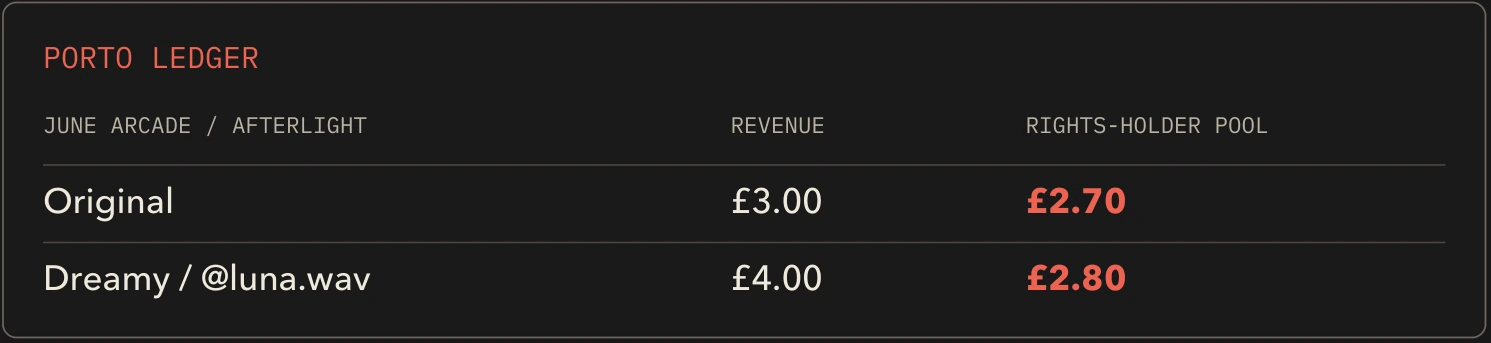
The proposed payout record
Daily settlement is a product target. The prototype Ledger is illustrative. Private listening data and audio stay off chain; payout records are designed to make the money traceable.
05 / What comes next
Now
Explore playback, voice and text requests, variations and track connections.
Open prototypeNext
Licensed catalogue. Real paid listening. Traceable settlement.
Then
Measure return listening, sharing and artist income before expanding catalogue and reach.
Built by people who know both.
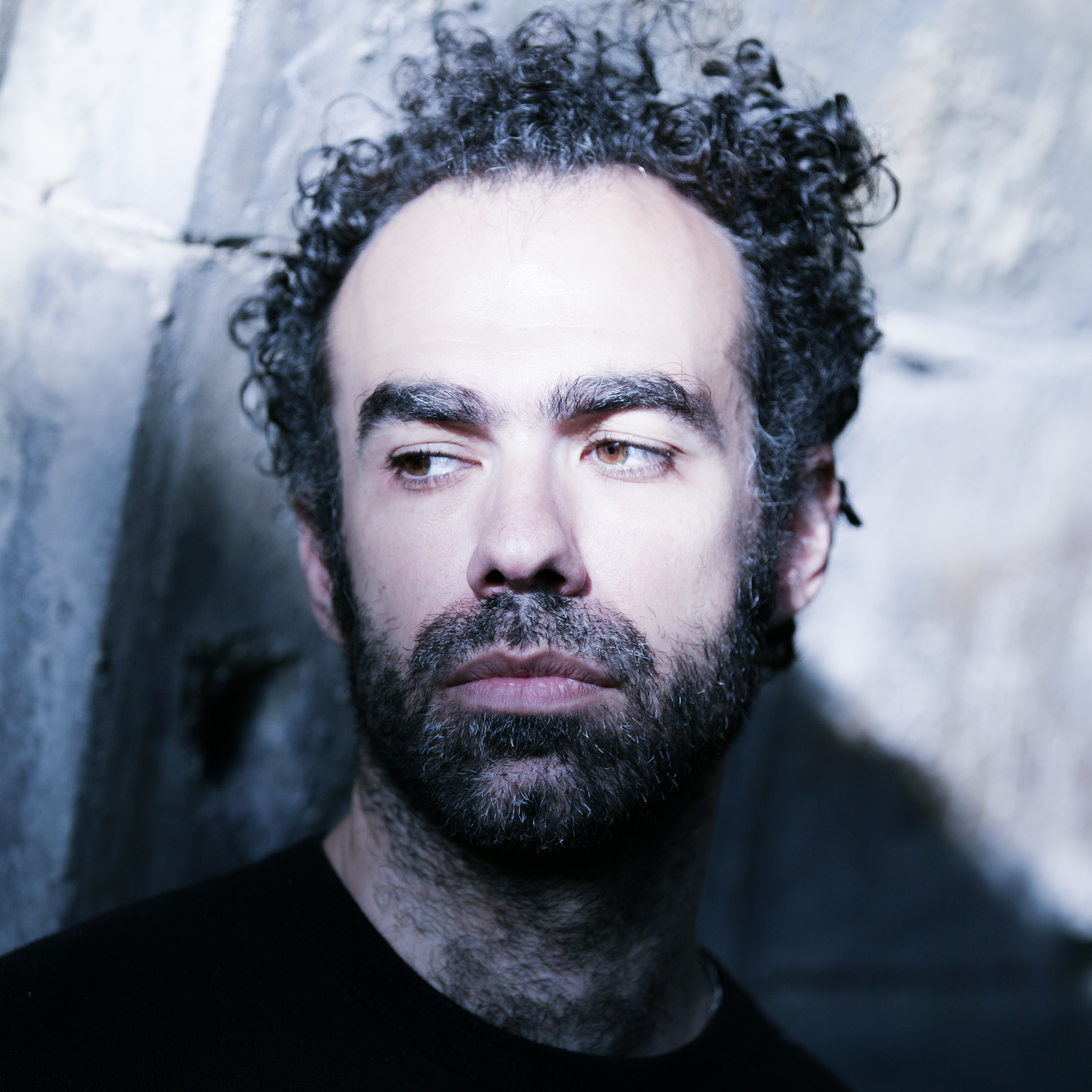
Technical CEO / Co-founder
Movement, Parity, Dapper and Fuel. Former CTO of Inflow Music. Publishing experience across 300+ artists.
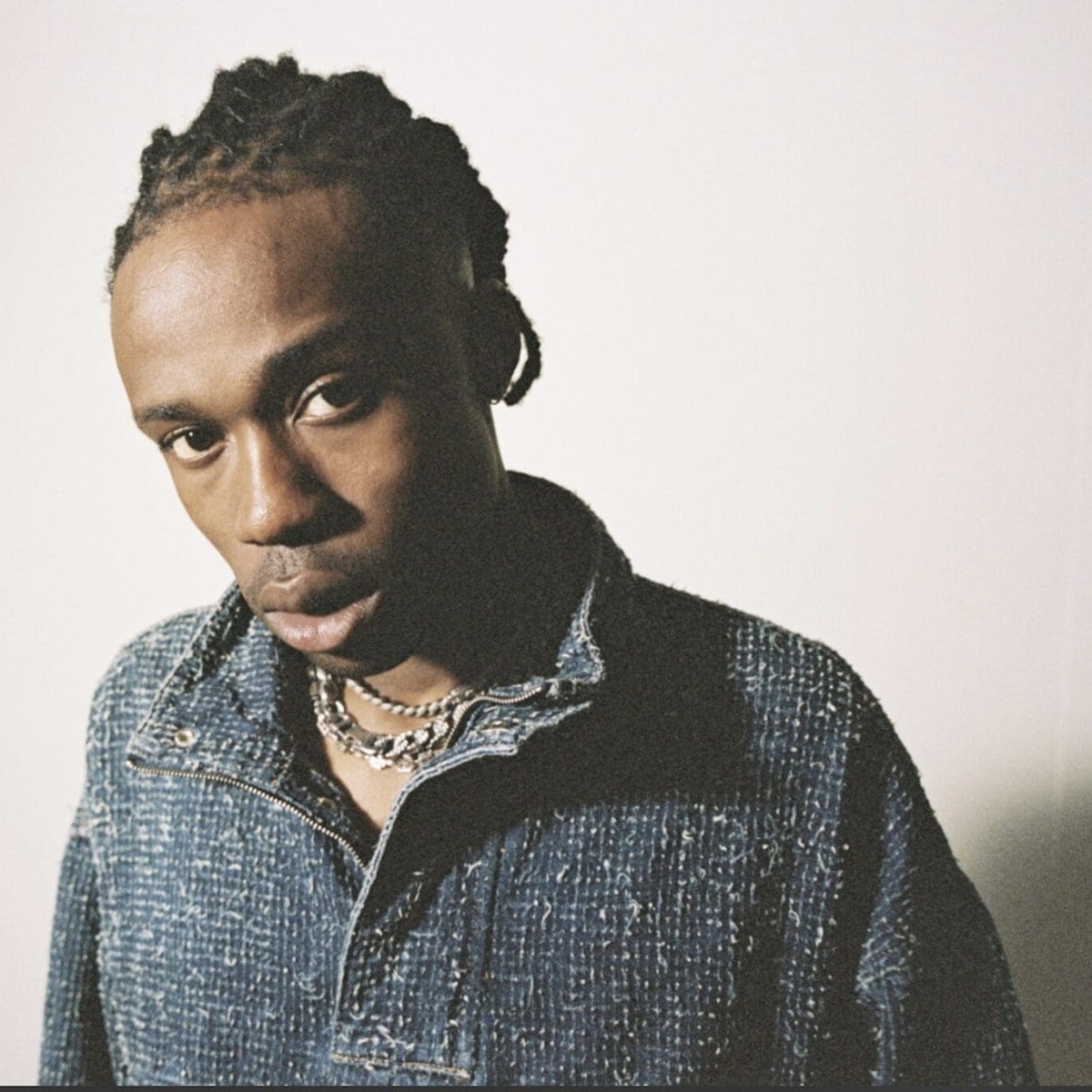
CMO / Co-founder
MediaCom, M&C Saatchi, TBWA and BBH. Founder of Thinning Room. Recording artist and artist manager.
 Founder programme · Autumn 2026 cohort
Leave your email for product and pilot updates.